Let’s explore what similes really are and why they matter. In simple terms, a simile is a way to compare two things using the words “like” or “as.” When we say something is as bright as the sun or different like night and day, we help readers see and feel ideas more clearly. That is the real meaning of similes.
Strong similes make writing colorful and easy to understand. Instead of saying something is “different,” a simile shows how it is different. This is why similes are so important in creative writing. They help readers imagine, smile, and remember what they read.
For example, kids, students, and beginners often use similes to make stories more fun. Writers also use them in poems, essays, and even daily speech. You might say, “My idea was different like a square in a circle box.” That simple comparison paints a clear picture.
In this post, you will learn strong examples of similes, read real simile sentences, and practice how to use similes in writing. By the end, you’ll feel confident creating your own creative writing similes.
20 Strong Similes for Different with Meaning and Examples
- Different like night and day
Meaning: Completely unlike each other
Explanation: Shows total contrast
Examples:
- The twins are different like night and day.
- City life and village life are different like night and day.
- Different as apples and oranges
Meaning: Not the same at all
Explanation: Compares two unlike things
Examples:
- Their ideas are as apples and oranges.
- Math and art feel as apples and oranges to me.
- Different like chalk and cheese
Meaning: Very opposite
Explanation: Highlights strong difference
Examples:
- Their tastes are like chalk and cheese.
- The two plans were chalk and cheese.
- Different as fire and ice
Meaning: Opposite in nature
Explanation: Shows strong emotional contrast
Examples:
- Their moods are fire and ice.
- The brothers are as fire and ice.
- Different like oil and water
Meaning: Cannot mix
Explanation: Shows things that don’t blend
Examples:
- Their styles are oil and water.
- Those ideas mix like oil and water.
- Different as day from night
Meaning: Totally unlike
Explanation: Emphasizes clear difference
Examples:
- Their jobs are day from night.
- The answers were day from night.
- Different like a cat and a dog
Meaning: Always disagree
Explanation: Common everyday contrast
Examples:
- They argue like a cat and a dog.
- The teams are cat and dog.
- Different as black and white
Meaning: Clear and obvious difference
Explanation: No confusion between them
Examples:
- The rules are black and white.
- Their choices were black and white.
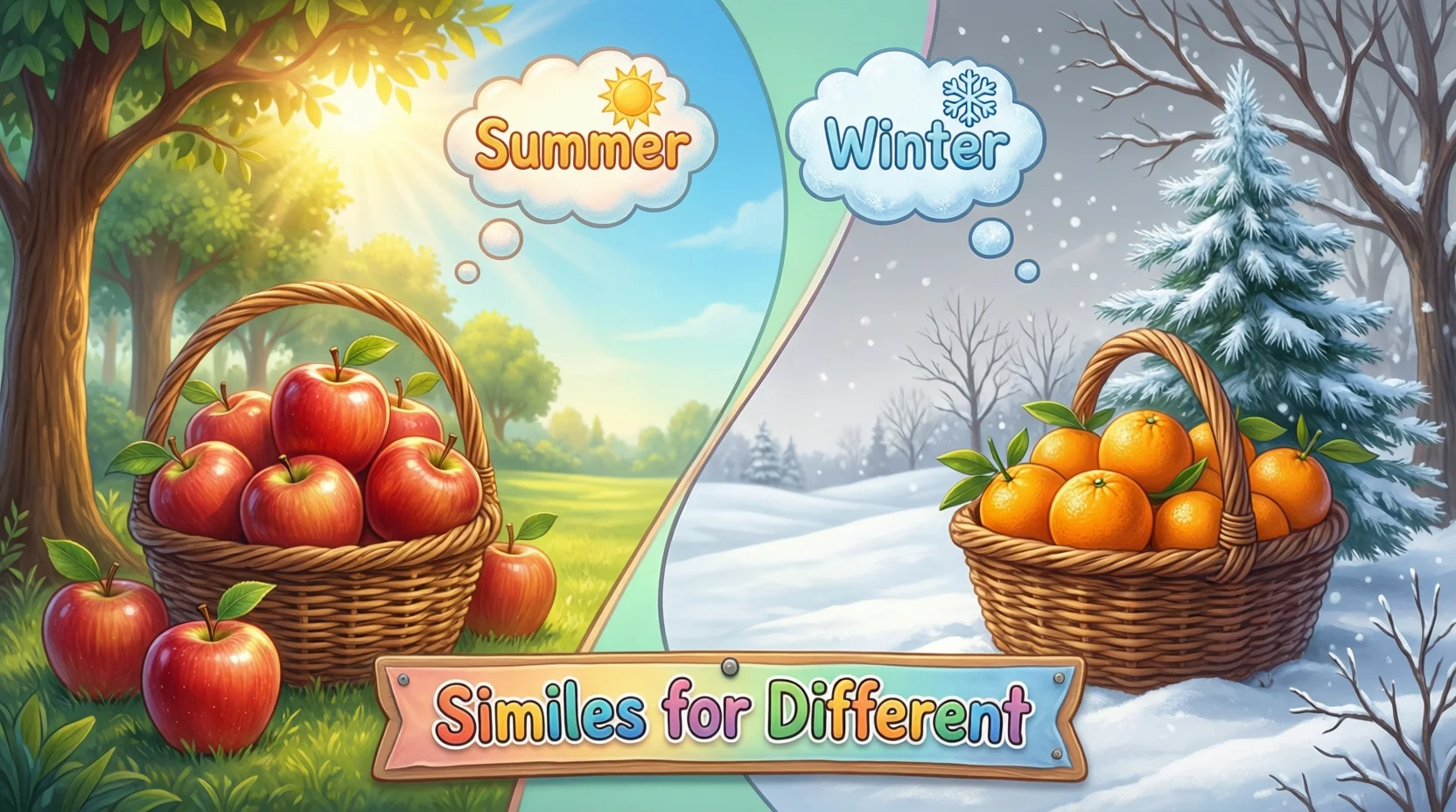
- Different like summer and winter
Meaning: Very opposite feeling
Explanation: Uses seasons to show contrast
Examples:
- Their energy is summer and winter.
- The moods felt like summer and winter.
- Different as the sun and the moon
Meaning: Separate and unique
Explanation: Shows distant contrast
Examples:
- Their dreams are sun and moon.
- The twins shine like sun and moon.
- Different like a square peg in a round hole
Meaning: Does not fit
Explanation: Shows mismatch
Examples:
- He felt like a square peg in a round hole.
- The idea was a square peg in a round hole.
- Different as loud thunder and soft rain
Meaning: Strong contrast
Explanation: Uses sound difference
Examples:
- Their voices are thunder and rain.
- The moods were thunder and rain.
- Different like east and west
Meaning: Far apart
Explanation: Shows distance and contrast
Examples:
- Their views are east and west.
- The cultures feel east and west.
- Different as a lion and a lamb
Meaning: Strong vs gentle
Explanation: Shows power contrast
Examples:
- His moods are lion and lamb.
- The leaders were lion and lamb.
- Different like fast and slow
Meaning: Opposite speed
Explanation: Simple clear contrast
Examples:
- Their learning styles are fast and slow.
- The runners were fast and slow.
- Different as ice cream and soup
Meaning: Not alike
Explanation: Food contrast for clarity
Examples:
- Their plans are ice cream and soup.
- The ideas felt like ice cream and soup.
- Different like old and new
Meaning: Past vs present
Explanation: Time-based contrast
Examples:
- The phones are old and new.
- Their thinking is old and new.
- Different as calm water and wild waves
Meaning: Peaceful vs chaotic
Explanation: Nature contrast
Examples:
- Their minds are calm water and wild waves.
- The days felt calm water and wild waves.
- Different like a whisper and a shout
Meaning: Soft vs loud
Explanation: Shows volume difference
Examples:
- Their voices are whisper and shout.
- The messages were whisper and shout.
- Different as gold and stone
Meaning: Valuable vs plain
Explanation: Shows worth difference
Examples:
- Their ideas are gold and stone.
- The results felt like gold and stone.
Practice Section: Try These Simile Exercises
- Complete: Different like and.
Answer: Night and day
Explanation: Shows total contrast - Identify the simile: “Their ideas are like oil and water.”
Answer: Like oil and water
Explanation: Uses “like” to compare - Fill in: Different as and.
Answer: Apples and oranges
Explanation: Common contrast simile - Is this a simile: “She is unique”?
Answer: No
Explanation: No “like” or “as” - Complete: Different like and winter.
Answer: Summer
Explanation: Seasonal contrast - Find the simile word: “as black as night”
Answer: As
Explanation: Similes use “as” - Choose the simile:
a) Very different
b) Different like fire and ice
Answer: b
Explanation: Uses comparison - Fill in: Different as and cheese.
Answer: Chalk
Explanation: Common phrase - Is this a simile: “He runs fast”?
Answer: No
Explanation: No comparison - Create one: Different like and.
Answer: Any correct pair
Explanation: Shows contrast
Conclusion
Strong similes help writers explain ideas in a simple and fun way. Instead of just saying something is different, similes show the difference clearly. This makes writing easier to understand and more enjoyable to read. From stories to school work, creative writing similes bring words to life.
Now that you know the meaning of similes and have seen many simile sentences, you can start using them with confidence. Try making your own comparisons using things you see every day. You might say something is different like night and day, or come up with something new and creative. The more you practice, the better your writing will become.