In simple terms, a simile is a figure of speech that compares two different things using words like “like” or “as.” For example, you might say, “The soup was hot like fire.” That comparison helps readers see, taste, and feel the food more clearly.
Strong similes make writing more fun and alive. Instead of saying food is “good” or “bad,” similes help you show how it tastes, smells, or feels. This is why similes are so important in creative writing. They turn plain sentences into pictures in the reader’s mind.
When writing about food, similes work especially well. Food is something everyone understands. A good simile can make a reader hungry, happy, or even disgusted. For example, instead of saying “The cake was sweet,” you might say, “The cake was sweet like honey dripping in the sun.” That sounds richer and clearer.
Let’s explore strong similes for food, see real simile sentences, and learn how to use similes in writing step by step.
20 Strong Similes for Food with Meaning and Examples
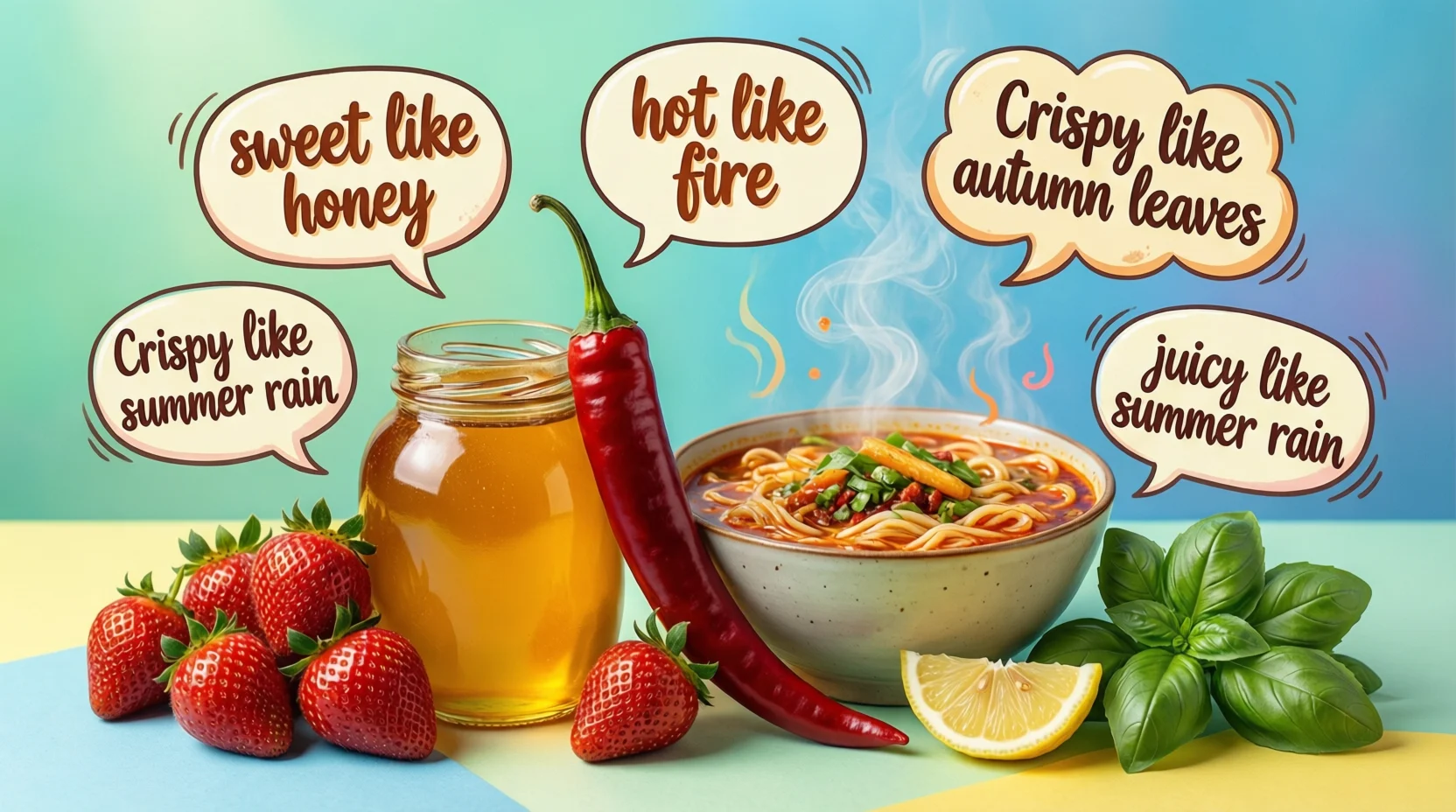
- Sweet like honey
Meaning: Very sweet and pleasant
Explanation: Honey is a natural symbol of sweetness.
Examples:
- The dessert was sweet like honey.
- Her words were sweet like honey after dinner.
- Hot like fire
Meaning: Extremely hot or spicy
Explanation: Fire shows intense heat.
Examples:
- The curry was hot like fire.
- My mouth burned; the sauce was hot like fire.
- Cold as ice cream
Meaning: Very cold and refreshing
Explanation: Ice cream melts from cold.
Examples:
- The milkshake was cold as ice cream.
- I drank water cold as ice cream on a hot day.
- Crunchy like fresh snow
Meaning: Light and crisp texture
Explanation: Snow crunches softly underfoot.
Examples:
- The chips were crunchy like fresh snow.
- The salad bit felt crunchy like fresh snow.
- Soft as butter
Meaning: Very soft and smooth
Explanation: Butter melts easily.
Examples:
- The bread was soft as butter.
- The cake felt soft as butter in my mouth.
- Dry like sand
Meaning: Lacking moisture
Explanation: Sand has no wetness.
Examples:
- The chicken was dry like sand.
- The rice tasted dry like sand.
- Rich like cream
Meaning: Full, smooth, and heavy taste
Explanation: Cream is thick and rich.
Examples:
- The sauce was rich like cream.
- The soup tasted rich like cream.
- Sweet as sugar
Meaning: Extremely sweet
Explanation: Sugar is pure sweetness.
Examples:
- The candy was sweet as sugar.
- Her smile felt sweet as sugar after lunch.
- Hard as a rock
Meaning: Very hard to chew
Explanation: Rocks cannot be bitten.
Examples:
- The bread was hard as a rock.
- The cookie felt hard as a rock.
- Fresh like morning dew
Meaning: Clean and fresh taste
Explanation: Morning dew feels pure.
Examples:
- The fruit tasted fresh like morning dew.
- The salad smelled fresh like morning dew.
- Greasy like oil
Meaning: Full of oil or fat
Explanation: Oil is slick and heavy.
Examples:
- The fries were greasy like oil.
- My fingers felt greasy like oil.
- Bitter as medicine
Meaning: Sharp and unpleasant taste
Explanation: Medicine often tastes bitter.
Examples:
- The drink was bitter as medicine.
- The coffee felt bitter as medicine.
- Light as air
Meaning: Easy to eat, not heavy
Explanation: Air has no weight.
Examples:
- The pastry was light as air.
- The foam tasted light as air.
- Sticky like glue
Meaning: Clings to teeth or fingers
Explanation: Glue sticks strongly.
Examples:
- The candy was sticky like glue.
- The sauce felt sticky like glue.
- Juicy like a ripe peach
Meaning: Full of liquid and flavor
Explanation: Ripe peaches drip juice.
Examples:
- The steak was juicy like a ripe peach.
- The burger tasted juicy like a ripe peach.
- Sour like a lemon
Meaning: Sharp, acidic taste
Explanation: Lemons are very sour.
Examples:
- The candy was sour like a lemon.
- Her face puckered; it was sour like a lemon.
- Smooth as silk
Meaning: Very smooth texture
Explanation: Silk feels soft and even.
Examples:
- The pudding was smooth as silk.
- The sauce slid smooth as silk.
- Burnt like charcoal
Meaning: Overcooked and bitter
Explanation: Charcoal is burnt wood.
Examples:
- The toast tasted burnt like charcoal.
- The meat smelled burnt like charcoal.
- Fluffy like clouds
Meaning: Soft and airy
Explanation: Clouds look light and puffy.
Examples:
- The pancakes were fluffy like clouds.
- The rice felt fluffy like clouds.
- Plain as water
Meaning: No strong taste
Explanation: Water has little flavor.
Examples:
- The soup was plain as water.
- The meal felt plain as water.
Practice Section: Try These Simile Exercises
- Complete: The soup was hot like
Answer: Fire
Explanation: Fire shows strong heat. - Identify the simile: “The cake was soft as butter.”
Answer: Soft as butter
Explanation: It compares texture using “as.” - Complete: The lemon candy was sour like
Answer: A lemon
Explanation: Lemons are very sour. - Is this a simile? “The bread tasted sweet.”
Answer: No
Explanation: It has no comparison. - Fill in: The fries were greasy like
Answer: Oil
Explanation: Oil explains grease. - Identify: “The pudding was smooth as silk.”
Answer: Smooth as silk
Explanation: Uses “as” for comparison. - Complete: The meat was dry like
Answer: Sand
Explanation: Sand shows dryness. - Is this a simile? “The burger was juicy like a peach.”
Answer: Yes
Explanation: Uses “like.” - Fill in: The pancakes were fluffy like
Answer: Clouds
Explanation: Clouds suggest light texture. - Identify the meaning: “Plain as water”
Answer: No strong taste
Explanation: Water has little flavor.
Conclusion:
Strong similes help your writing come alive. Instead of telling readers how food tastes, similes show them. They add color, feeling, and clear meaning to simple sentences. In creative writing, similes turn boring words into strong images readers remember.
By learning the meaning of similes, reading examples of similes, and practicing simile sentences, you can improve your writing fast. Food similes are fun, easy, and perfect for beginners. You might say they are the spice of language.
Now it’s your turn. Try writing your own similes for food you love or hate. The more you practice, the stronger your writing will become.