Let’s explore similes in simple terms. A simile is a figure of speech that compares two things using the words “like” or “as.” Writers use similes to help readers see, feel, and imagine ideas more clearly. For example, saying “the sand was hot” is fine, but saying “the sand was hot like a frying pan” paints a stronger picture.
In creative writing, strong similes matter because they bring scenes to life. They add color, emotion, and detail without using long descriptions. This is why similes are common in stories, poems, and even everyday speech. When used well, they make writing more fun to read and easier to understand.
In this post, you’ll learn the meaning of similes, see examples of similes used in real sentences, and understand how to use similes in writing. We’ll focus on similes for the beach, using simple language and clear ideas. By the end, you’ll be able to spot strong similes and write your own with confidence.
20 Strong Similes for the Beach (With Meaning and Examples)
- The sand was soft like powdered sugar
Meaning: Very soft and smooth
Explanation: Compares sand to fine sugar
Examples:
- The sand felt soft like powdered sugar under my feet.
- Kids ran across sand soft like powdered sugar.
- The waves rolled in like lazy giants
Meaning: Slow and powerful waves
Explanation: Gives waves a calm strength
Examples:
- The waves rolled in like lazy giants at dawn.
- We watched waves like lazy giants reach shore.
- The ocean sparkled like glass
Meaning: Very shiny and clear
Explanation: Shows bright reflection
Examples:
- The ocean sparkled like glass in the sun.
- Blue water shone like glass all afternoon.
- The beach stretched out like a golden carpet
Meaning: Long and wide beach
Explanation: Highlights color and size
Examples:
- The beach stretched like a golden carpet.
- We walked on a golden carpet of sand.
- The sea breeze felt cool like a whisper
Meaning: Gentle and soft wind
Explanation: Shows light movement
Examples:
- A breeze like a whisper cooled us.
- The air brushed my face like a whisper.
- The sun hung over the sea like a glowing coin
Meaning: Bright, round sun
Explanation: Clear shape comparison
Examples:
- The sun looked like a glowing coin.
- A glowing coin dipped into the sea.
- The water was clear like a window
Meaning: Very transparent
Explanation: Easy to imagine clarity
Examples:
- The water was clear like a window.
- Fish swam in water like a window.
- Footprints faded like chalk in rain
Meaning: Disappeared quickly
Explanation: Shows short-lasting marks
Examples:
- Our footprints faded like chalk in rain.
- Waves erased steps like chalk.
- The shoreline curved like a smile
Meaning: Gently curved shape
Explanation: Adds warmth to description
Examples:
- The shoreline curved like a smile.
- A smiling curve hugged the sea.
- The waves crashed like drums
Meaning: Loud and strong sound
Explanation: Focuses on noise
Examples:
- Waves crashed like drums at night.
- The shore echoed like drums.
- The sand burned like hot coals
Meaning: Extremely hot sand
Explanation: Strong heat comparison
Examples:
- The sand burned like hot coals.
- I jumped from coals of sand.
- The beach smelled fresh like clean laundry
Meaning: Clean, pleasant smell
Explanation: Relatable scent
Examples:
- The beach smelled fresh like laundry.
- Clean air felt like laundry day.
- The tide pulled back like a slow breath
Meaning: Gentle retreat of water
Explanation: Calm movement
Examples:
- The tide pulled back like a breath.
- The sea breathed out slowly.
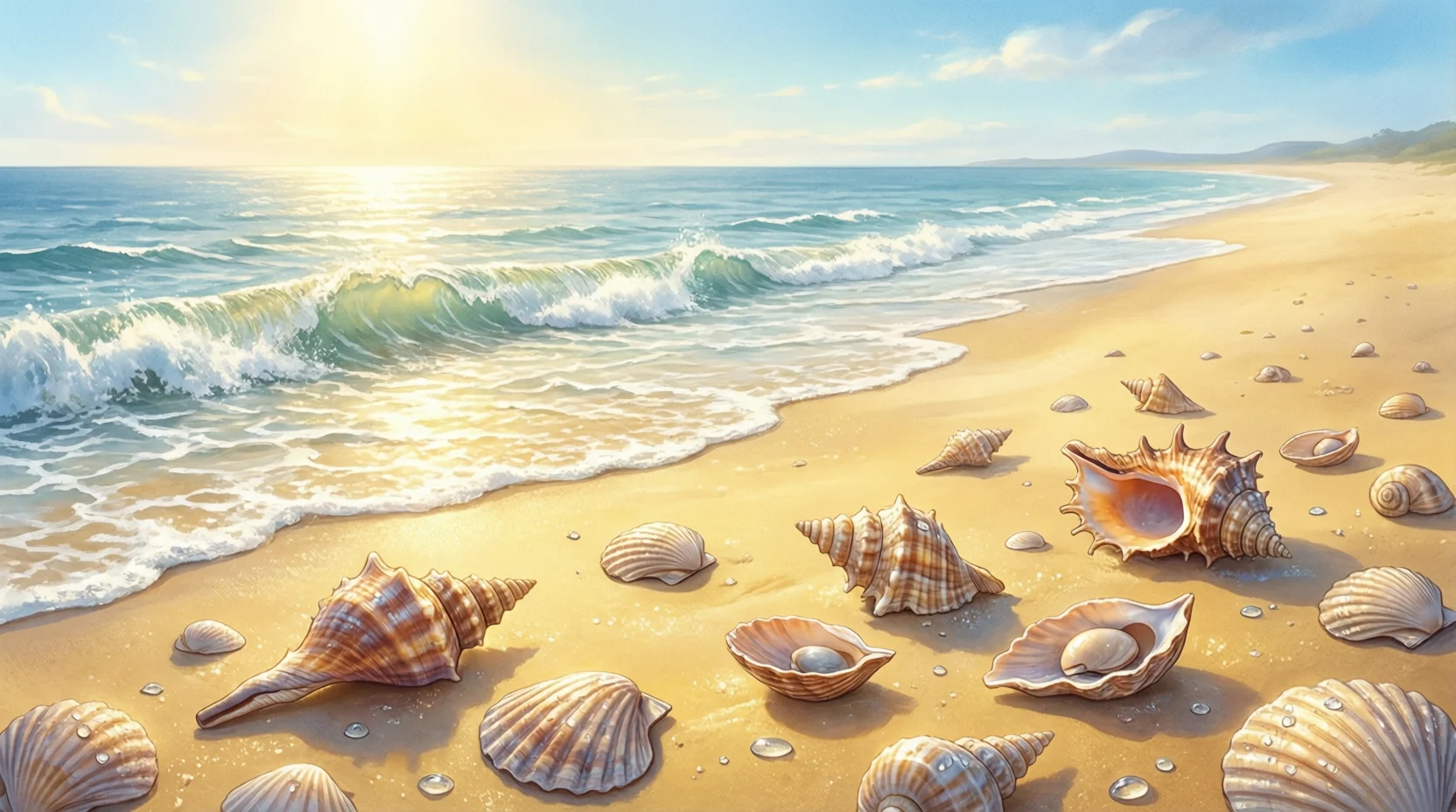
- The shells shone like tiny jewels
Meaning: Very colorful and bright
Explanation: Highlights beauty
Examples:
- Shells shone like tiny jewels.
- Kids collected jewel-like shells.
- The waves kissed the shore like shy guests
Meaning: Soft wave movement
Explanation: Adds emotion
Examples:
- Waves kissed the shore softly.
- Shy guests touched the sand.
- The horizon looked flat like a ruler
Meaning: Perfectly straight line
Explanation: Clear visual
Examples:
- The horizon looked flat like a ruler.
- Sea met sky in a ruler line.
- The beach glowed like gold at sunset
Meaning: Bright and warm color
Explanation: Shows evening light
Examples:
- The beach glowed like gold.
- Gold light covered the shore.
- The water felt cold like ice
Meaning: Very cold water
Explanation: Simple and direct
Examples:
- The water felt cold like ice.
- Ice-cold waves splashed us.
- The clouds floated like cotton
Meaning: Soft, fluffy clouds
Explanation: Light sky image
Examples:
- Clouds floated like cotton.
- Cotton clouds drifted above.
- The beach was calm like a sleeping baby
Meaning: Very peaceful
Explanation: Strong calm feeling
Examples:
- The beach was calm like a baby asleep.
- Silence rested on the shore.
Practice Section: Try These Simile Exercises
- Complete: The sand was hot like
Answer: fire
Explanation: Shows strong heat. - Identify the simile: The waves roared like lions.
Answer: like lions
Explanation: Uses “like” to compare sound. - Complete: The ocean shone like
Answer: glass
Explanation: Describes brightness. - Is this a simile? The beach was peaceful.
Answer: No
Explanation: No comparison word. - Complete: Footprints vanished like
Answer: smoke
Explanation: Shows quick fading. - Identify the simile: Sand felt like silk.
Answer: like silk
Explanation: Compares texture. - Complete: The breeze moved like
Answer: a whisper
Explanation: Shows softness. - Is this a simile? Waves are giants.
Answer: No
Explanation: That is a metaphor. - Complete: The shells shone like
Answer: jewels
Explanation: Shows beauty. - Identify the simile: The sun was bright like gold.
Answer: like gold
Explanation: Uses “like” for comparison.
Conclusion
Strong similes help readers see what you see. They turn simple ideas into clear pictures. When you use similes for the beach, your writing feels more alive and fun to read. Instead of telling readers what something is like, you show them.
In simple terms, good similes compare familiar things in fresh ways. They are easy to use, even for beginners. By practicing with simile sentences and learning the meaning of similes, you improve your creative writing step by step.
Now it’s your turn. Look around, think about what something feels, sounds, or looks like, and try writing your own similes. You might say one great comparison can change a whole paragraph. 🌊✍️